- Free Consultation: (601) 783-5800 Tap Here to Call Us






What Happens If You Are Partly at Fault for an Accident in Louisiana?


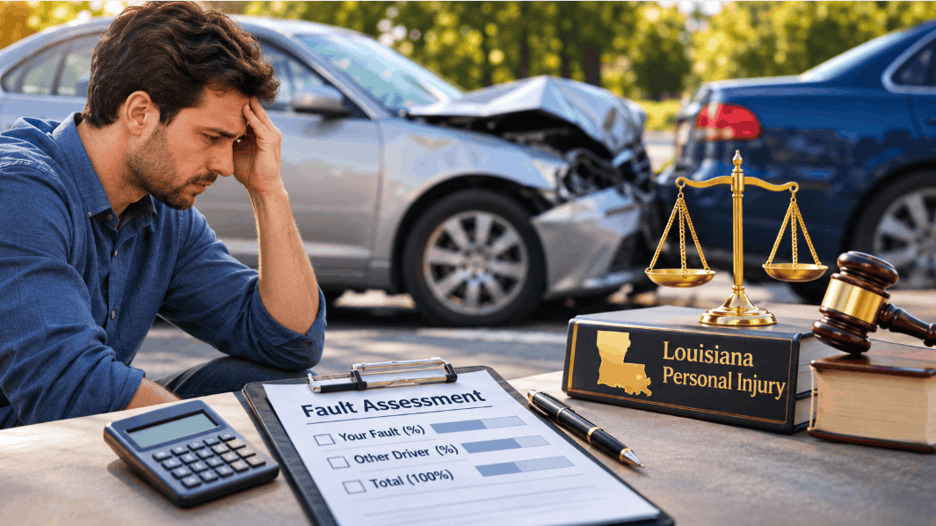
The crash is over, but the questions are not. Then the insurance adjuster calls and says, “Our review shows you share some of the blame.” Suddenly, a claim that felt simple feels shaky.
Here is the good news: being partly at fault does not automatically end your claim. The rules did change in 2026, though, and those changes matter.
This post explains how fault is divided, what the new 51% rule means for Personal Injury in Louisiana cases, and the steps that protect your recovery.
Why “Partly at Fault” Is the Insurance Company’s Favorite Argument
Most accidents are not one-sided. Maybe you were a few miles over the limit. Maybe you glanced at your phone, or you didn’t see the wet floor sign. Insurers know this, and they look for any detail that lets them assign you a percentage of the blame.
Why those percentages matter
Every point of fault assigned to you lowers what the insurer has to pay. Adjusters are trained to move that number quickly, often before you have seen a doctor or spoken to a lawyer. Local insurers also have their own habits, and the fault number they offer in week one is rarely where a fully prepared case ends up.
Personal Injury in Louisiana: How Fault Is Divided
Louisiana does not hand the whole blame to one person. Under Louisiana Civil Code Article 2323, fault is shared among everyone who caused or contributed to the injury, and a jury or judge assigns each party a percentage.
The big change: the 51% bar
For years, Louisiana used pure comparative fault, which meant you could recover something even if you were mostly to blame. That ended on January 1, 2026. Now the rule works like this:
- 50% at fault or less: you can still recover, but your compensation is reduced by your percentage.
- 51% at fault or more: you cannot recover damages at all.
What that looks like in dollars
Say your damages total $100,000. If you are found 20% at fault, you can recover $80,000. If you are found 51% at fault, you recover nothing.
A word about timing
If your accident happened before 2026, ask an attorney which version of the rule applies to your claim. Do not assume either way.
That single percentage point can decide an entire case. It is also why fault is no longer a side issue. It is the issue.
What Partial Fault Looks Like in Real Cases
Fault arguments show up differently depending on how you were hurt.
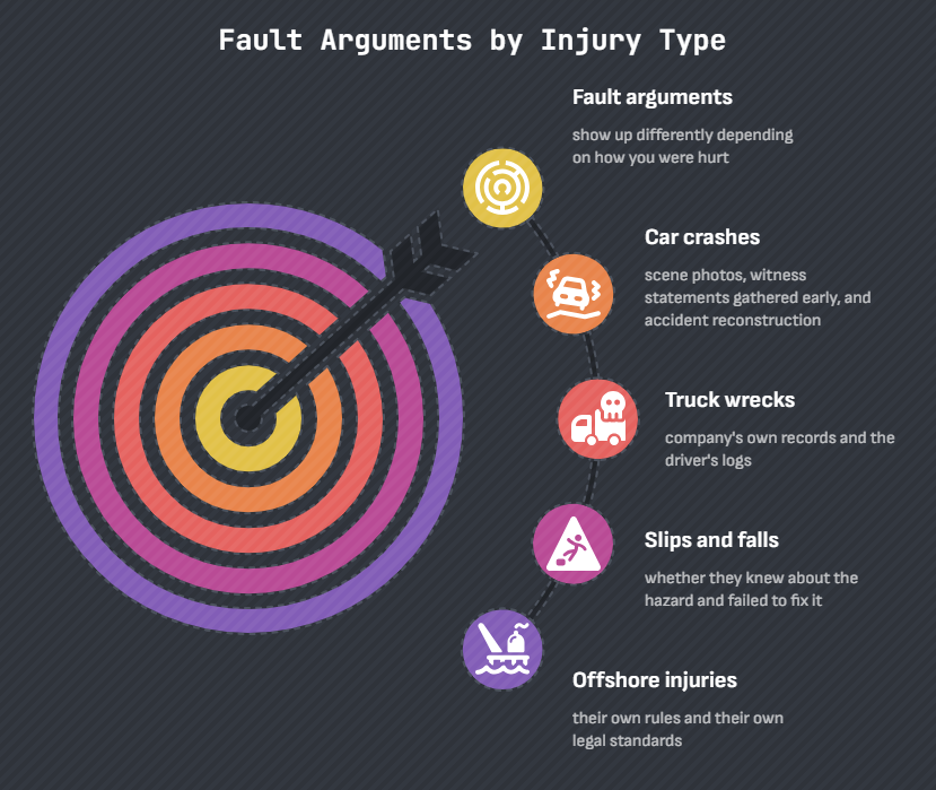
Car crashes and truck wrecks
The other side may claim you braked late, changed lanes without checking, or were distracted. A strong case answers with evidence: scene photos, witness statements gathered early, and accident reconstruction when it is needed. When a commercial truck is involved, the company’s own records and the driver’s logs can shift blame back where it belongs.
Slips and falls
Property owners often argue you should have watched your step. The real question is whether they knew about the hazard, such as water left on a floor or poor lighting on a stairwell, and failed to fix it.
Offshore injuries
Offshore claims follow their own rules and their own legal standards, so fault gets argued differently than it does after a highway wreck. If you were hurt on a vessel or platform, read about offshore accidents and wrongful death claims.
From Problem to Solution: What to Do Right Now
You cannot control what the insurer says, but you can control what you do next.
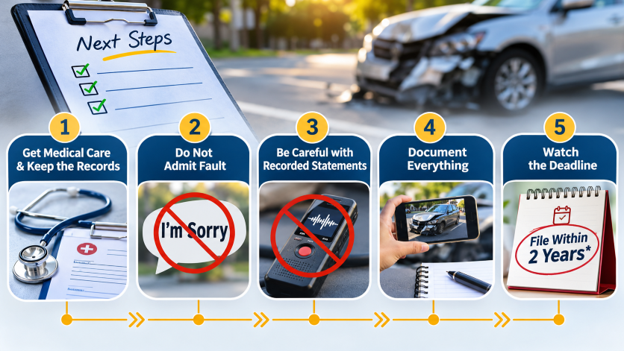
Step 1: Get medical care and keep the records
Treatment protects your health, and it creates the paper trail that proves your injuries.
Step 2: Do not admit fault
Even a polite “I’m sorry” at the scene can be quoted back to you later. Stick to the facts.
Step 3: Be careful with recorded statements
You are not required to give the other driver’s insurer a recorded statement. Those conversations are often used to push your percentage higher.
Step 4: Document everything
Take photos, save messages, and write down what you remember while it is fresh.
Step 5: Watch the deadline
For most injury claims from accidents on or after July 1, 2024, Louisiana generally allows two years to file. Earlier accidents may have a shorter window, and exceptions exist, so confirm your exact date with a lawyer.
How a Louisiana Accident Injury Attorney Fights the Fault Argument
Courts in New Orleans, Baton Rouge, Shreveport, and the smaller parishes do not all run the same way. Some judges lean toward mediation. Others expect firm trial preparation. A lawyer who handles Personal Injury in Louisiana knows how local courts weigh fault and damages, and how insurers in the region behave.
That knowledge is what turns a defensive claim into a fighting one. John J. McNeil is licensed in both Mississippi and Louisiana, and he prepares every case as if it is going to trial.
Insurance companies know it, and that willingness to fight often leads to better offers. If you want to understand how the firm approaches these claims, visit the personal injury practice area or read the story behind the firm and its approach.
Common Questions About Shared Fault
Can I still recover if I was partly to blame?
Yes, if your share is 50% or less. Your compensation is reduced by your percentage, but you can still recover. Once you hit 51%, the claim is barred.
What if more than one person caused the accident?
Fault can be split among everyone responsible. A second driver, a business, or an employer may share the blame. Identifying every responsible party can protect your total recovery.
Will I have to go to court?
Not always. Many claims settle. Still, a case built for trial usually settles for more, because the insurer sees the risk of facing a jury.
Do Not Let One Percentage Decide Your Future
Being partly at fault is stressful, but it is not the end of your options. Under the new rules, the fight over fault is where many Personal Injury in Louisiana claims are won or lost, so you want someone in your corner early.
If an insurer is blaming you for a crash, speak with the Law Office of John J. McNeil before you say anything more to them.
Call (601) 783-5800 or request your free consultation.