- Free Consultation: (601) 783-5800 Tap Here to Call Us






What Should You Bring to Your First Personal Injury Lawyer Consultation?


The days after a wreck are a blur. You have a sore neck, a car in the shop and an adjuster who keeps calling. Then you finally book a meeting with one of the Local Personal Injury Lawyers in your area, and a new worry hits: what am I supposed to bring?
Here’s the good news. You don’t need a perfect file. But the more you bring, the faster a lawyer can see what happened, who’s responsible and what your case is worth pursuing.
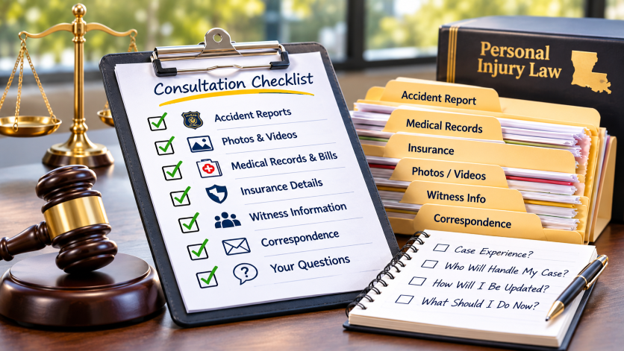
Here’s a simple checklist.
Why Preparation Matters Before You Walk In
The Problem: First Meetings Are Short and Memories Fade
A first consultation is a conversation, not a deposition. In that time, a lawyer has to understand the accident, your injuries and the insurance picture. Details you remember clearly today get fuzzy in a few weeks. Without paperwork, important facts get lost.
The Solution: Bring the Paper Trail
Documents turn “I think it happened like this” into “here’s what happened.” They also help your lawyer move quickly on things that can’t wait, like preserving evidence and reaching witnesses while their memories are fresh.
Your First Consultation Checklist
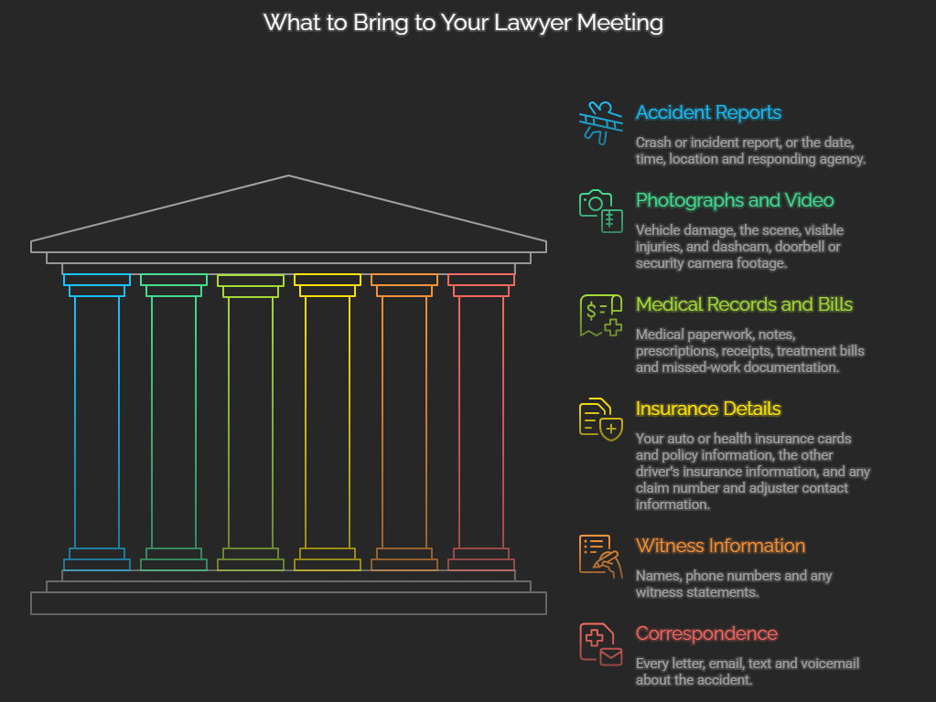
1. Accident Reports
Start with the official record of what happened.
Police or Incident Reports
If officers came to the scene, bring the crash report or the report number. For a slip and fall at a store or business, bring any incident report the manager had you fill out.
Don’t Have It Yet?
Don’t hold off on the meeting. Bring the date, time and location of the accident and the name of the agency that responded. We can help you track down the rest.
2. Photographs and Video
Pictures often tell the story better than words. Bring anything you or others captured:
- Vehicle damage from several angles
- The scene itself, including skid marks, road conditions, spilled liquid or poor lighting
- Visible injuries, with photos taken over time as bruises and swelling change
- Dashcam, doorbell or security camera footage, if any exists
Don’t delete anything from your phone. Bring the phone or send the files ahead of time.
3. Medical Records and Bills
Your injuries are the core of your claim.
Bring whatever you have:
- ER or urgent care paperwork
- Doctor, chiropractor and physical therapy notes
- Prescriptions and receipts
- Hospital and treatment bills
- Missed-work documentation, such as pay stubs or a note from your employer
If you haven’t seen a doctor yet, make an appointment. Your health comes first, and treatment records link your injuries to the accident.
4. Insurance Details
Bring your own auto or health insurance cards and the policy information. Also bring the other driver’s insurance information if you got it. A claim number and your adjuster’s name and phone number help too.
Insurance can get complicated fast. Adjusters often sound friendly while looking for ways to reduce what they’ll pay. Showing your lawyer exactly what coverage is involved lets them handle that part for you.
5. Witness Information
A neutral witness can make a big difference. Bring names, phone numbers and any statements. Even a quick note like “man in the blue truck saw it all” is useful.
Tip: Write It Down Today
Jot down what you remember while it’s fresh. Include the weather, the time, what you were doing and what the other person said. Short and messy is fine.
6. Correspondence
Bring every letter, email, text and voicemail you’ve gotten about the accident. That includes messages from insurance companies, the other driver, an employer or a property owner.
A Note on Recorded Statements and Social Media
Be careful what you say to the other side’s adjuster before you’ve talked to a lawyer, and stay off social media about the accident. Posts and statements can be twisted later.
What If You Don’t Have Everything?
Show up anyway. People often delay calling because their file feels incomplete, and delay can hurt a case. Bring what you have, and your lawyer will help gather the rest, including through investigators who can look at the scene and reach witnesses early.
This is another reason to look for Local Personal Injury Lawyers who work close to the courthouse and know the area. They know the insurers, the courts and the people involved, and that saves time.
Bring Your Questions Too
A consultation goes both ways. You’re deciding whether this is the right lawyer for you.
Consider asking:
- Who will actually handle my case day to day?
- How much experience do you have with cases like mine?
- How will you keep me updated?
- What should I do, and avoid doing, right now?
Don’t feel bad about talking to more than one firm. A good lawyer won’t mind. You should feel confident the person you hire is the person doing the work, and that they know this area of law well.
What to Expect at McNeil Law Office
At McNeil Law Office in Magnolia, your first consultation is free and confidential. Attorney John J. McNeil, who is licensed in Mississippi and Louisiana, handles cases directly, from serious truck wrecks to everyday collisions.
You can learn more about John J. McNeil and the firm’s background, or read what past clients have said.
Our personal injury practice covers car and truck wrecks, slip and falls and workers’ compensation. If your injury happened on the water or a rig, see our page on offshore accidents and wrongful death.
For more practical guides, visit our blog.
Final Thoughts
Preparing for your first meeting doesn’t have to be stressful. Gather your accident reports, photos, medical records, insurance details, witness information and correspondence, add a list of questions, and bring them along. If something’s missing, come anyway.
The right Local Personal Injury Lawyers will take your situation seriously and give you straight answers.
Ready to talk? Schedule your free consultation or call (601) 783-5800.